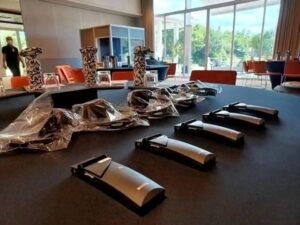
When organizing an international conference or multilingual event in Dubai, providing interpretation isn’t enough — it must be accurate, clear, and seamless. Renting high-quality Interpretation Equipment Rental in Dubai, that’s well-maintained, is essential to ensure every guest hears and understands the message without confusion or delay.
Interpretation Equipment Rental
-
Type of Interpretation Needed
First, decide whether your event requires simultaneous or consecutive interpretation. Simultaneous interpretation needs more advanced equipment — soundproof interpreter booths, transmitters, receivers, and professional-grade microphones. On the other hand, consecutive interpretation setups are simpler but require skilled interpreters with strong verbal memory and delivery. -
Sound Quality and Transmission Technology
Crisp, interference-free audio is non-negotiable. Choose between RF (radio frequency), IR (infrared), or wireless transmitters based on your venue size. Opt for tested and modern systems to avoid audio dropouts, static, or channel interference that can disrupt your event. -
On-Site Technical Support
Good equipment means nothing without reliable support. A qualified technician should be on-site before and during the event to handle setup, real-time troubleshooting, and teardown. This guarantees everything runs smoothly, from start to finish. -
Flexible Packages and Transparent Pricing
Not all events require large-scale setups. Look for a provider who offers customizable packages — only pay for the number of channels, headsets, booths, or interpreters you actually need. Ensure that delivery, setup, technical support, and potential overtime fees are clearly stated upfront. -
Test Setup Before the Event
A live technical test a few hours before your event is crucial. Check audio coverage, electrical setup, and emergency backups, and ensure the interpreters have a clear line of sight to the stage. This avoids surprises and ensures full functionality.
What Sets Top Equipment Providers Apart from the Competition
-
Tailored, Cost-Efficient Solutions
Great providers don’t force generic packages. They assess your event size, location, and audience to offer only what’s truly needed. A small meeting might need a portable kit, while a large conference may require multiple interpreter booths and multi-channel support. -
Up-to-Date, Well-Maintained Equipment
Outdated devices can ruin the listener’s experience. Choose vendors who regularly update and service their gear. The best ones offer HD audio systems, newer transmitters, and noise-cancelling headsets for an immersive experience. -
Human-First Customer Support
Beyond technical specs, how a company treats its clients matters. From the first consultation to post-event teardown, a responsive, understanding team that listens to your needs and adjusts quickly is what builds lasting trust. -
Emergency Readiness and Backup Systems
The best providers are always ready for the unexpected. Spare devices, backup technicians, and a contingency plan are essential to ensure zero downtime during your event.
Common Questions from Clients
-
When should I book the equipment?
Ideally, reserve your equipment at least a week in advance, especially during peak conference seasons. Last-minute bookings may limit your options or incur rush charges. -
Can I rent only part of the equipment?
Absolutely. You can rent only what you need — like headsets, receivers, or portable microphones — without committing to full booths or complete setups. -
What if there’s a sound failure or technical issue during the event?
Your provider should guarantee on-site technical support, have backup equipment ready, and conduct a pre-event system test to minimize any risk. -
Is the equipment suitable for outdoor events?
Yes, but it depends on the system. RF systems perform better outdoors. IR systems can struggle with direct sunlight or open-air setups. Always consult with your provider about the venue type. -
How many channels do I need?
One channel per target language is standard. For example, a trilingual event (original language + 2 interpreted languages) would need at least 3 channels.
Why Clients Prefer a Reliable Interpretation Equipment Rental from Provider
It’s not just about the equipment — it’s about peace of mind. When you offer:
-
High-quality, clear, modern audio systems
-
Flexible pricing and customizable packages
-
Friendly, responsive technical support
-
Transparency in communication and terms
You will find all facilities with Rowad al loghat m ask qouta now.
You’re not just a vendor — you’re a trusted partner. Clients choose you not only for your products, but because they know their message will be delivered clearly, professionally, and without disruption. That’s what earns you referrals, repeat clients, and long-term success.
How Simultaneous Interpretation Systems Work
Simultaneous interpretation systems allow spoken content to be translated in real time while the speaker is talking. Interpreters listen to the original speech through headphones (usually inside sound-isolated booths) and deliver the translation instantly to participants through dedicated audio channels.
These systems are essential for:
-
International conferences
-
Government and diplomatic meetings
-
Corporate events and summits
-
Exhibitions, factory visits, and guided tours
Main Types of Transmission Technologies
Interpretation systems differ mainly by how audio is transmitted:
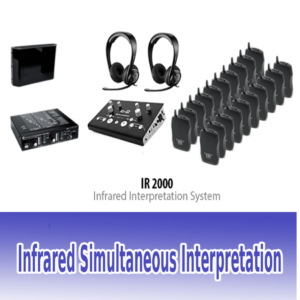
1. Infrared (IR) Systems
-
Widely used in conference halls and closed venues
-
High privacy (signal does not pass through walls)
-
Requires direct line of sight between transmitters and receivers
-
Ideal for formal conferences and meetings
2. Radio Frequency (FM / RF) Systems
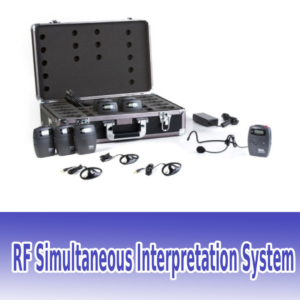
-
Suitable for indoor and outdoor use
-
Longer transmission range
-
Can be affected by interference
-
Often used for tours and large venues
3. Digital / Wi-Fi / IP-Based Systems
-
Modern and flexible solutions
-
Can integrate with Dante, network audio, or mobile apps
-
High audio quality and scalability
-
Ideal for hybrid and large-scale international events
Main Components of a Simultaneous Interpretation System
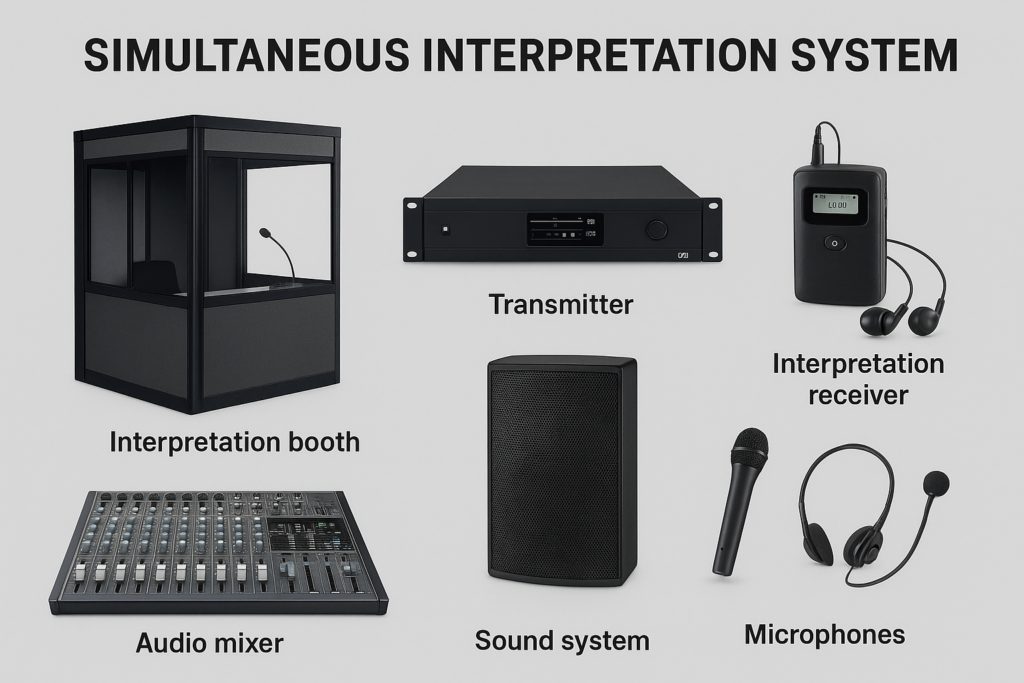
1. Transmitters
-
Send audio signals from interpreters or speakers to receivers
-
Can be fixed (conference systems) or portable (tour-guide systems)
2. Interpretation Receivers
-
Used by attendees to listen to the selected language channel
-
Available as handheld units, bodypacks, or smartphone-based solutions
3. Soundproof Interpretation Booths
-
Provide acoustic isolation for interpreters
-
Equipped with interpreter consoles, microphones, and headsets
-
Available as portable or permanent booths
-
Designed according to international standards for comfort and clarity
4. Audio Mixer (Sound Console)
-
Combines and controls all audio sources
-
Distributes sound to the PA system and interpretation transmitters
-
Essential for balancing microphones and interpretation channels
5. Sound System (PA System)
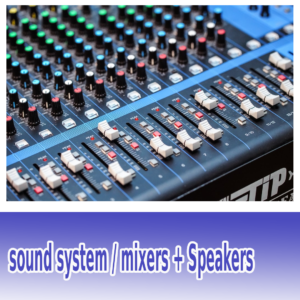
-
Loudspeakers are used for original speech and public announcements
-
Integrated with microphones and mixers
6. Microphones
Different microphones are used depending on the event setup (details below).
7 -Interpretation Booth (Simultaneous Interpretation Booth)
An interpretation booth is a sound-isolated enclosure designed for simultaneous interpreters to work in a controlled, quiet environment while delivering real-time interpretation during conferences and multilingual events.

Types of Microphones Used in Conferences in Dubai
-
Gooseneck / Conference Microphones:
Used on podiums and conference tables; clear and professional. -
Handheld Microphones:
Ideal for Q&A sessions and audience interaction. -
Headset Microphones:
Perfect for presenters or guides who move a lot; consistent sound quality. -
Lavalier (Clip-on) Microphones:
Small and discreet; commonly used for speeches and presentations. -
Boundary Microphones:
Placed on tables to capture multiple speakers. -
Shotgun Microphones:
Highly directional; used in auditoriums or stage environments.
Interpretation Headsets: Tour-Guide vs Standard Systems
Tour-Guide Interpretation Systems
-
Portable wireless systems for guided tours and site visits
-
Usually consists of bodypack transmitters and receivers
-
Designed for mobility, outdoor use, and noisy environments
-
Some systems support two-way (full-duplex) communication
-
Long battery life and docking chargers are common
Standard Conference Interpretation Headsets
-
Used mainly in conference halls and meeting rooms
-
Typically infrared or RF receivers with earphones
-
Designed for seated audiences
-
Support multiple language channels
Key Difference:
Tour-guide systems focus on mobility and group movement, while standard interpretation systems are designed for fixed seating and multi-language conferences.
Top Brands of Interpretation & Tour-Guide Systems
Sennheiser
-
One of the strongest and most trusted brands worldwide
-
Excellent audio quality and durability
-
Renowned for Tourguide and conference interpretation systems
-
Widely used in high-level international events
Williams Sound (Williams AV)
-
Industry leader in tour-guide and assistive listening systems
-
Offers FM, digital, and infrared solutions
-
Reliable, professional, and widely used for rentals
Listen Technologies
-
Known for ListenTALK and digital interpretation systems
-
Supports two-way communication and mobile app integration
-
Ideal for tours, training, and industrial environments
Televic
-
Premium conference and interpretation solutions
-
Used by government institutions and large organizations
-
Highly integrated and scalable systems
Bosch
-
Professional conference and interpretation technology
-
Strong reputation in large-scale conference environments
-
Excellent system integration and reliability
Other Notable Brands
-
TourTalk
-
Retekess
-
JTS
-
AXIWI
These brands offer cost-effective solutions for guided tours and small to medium events.
Which Brands Are Considered the Strongest?
-
Top-Tier Conference & Institutional Use:
Sennheiser, Televic, Bosch -
Best for Tour-Guide & Mobile Interpretation:
Williams Sound, Listen Technologies, TourTalk -
Budget-Friendly Solutions:
Retekess, selected JTS systems
Practical Tips for Choosing the Right System
-
Define the event type (conference, tour, exhibition, hybrid event).
-
Determine the number of languages and participants.
-
Consider venue size and indoor vs outdoor use.
-
Check system compatibility with mixers, PA systems, or networks.
-
Balance budget with quality and long-term reliability.
-
Choose brands with good after-sales support and spare parts availability.
Conclusion
Simultaneous interpretation systems are a vital part of successful international events. Choosing the right combination of transmitters, receivers, microphones, booths, and headsets—along with trusted global brands—ensures clear communication, professional delivery, and a seamless multilingual experience for all participants