Police Complaint Report Translation into Arabic
With the increasing presence of foreign nationals, international businesses, and cross-border interactions, police departments frequently receive complaints that are written or recorded in foreign languages. In such cases, translation of the police complaint report into Arabic becomes a legal necessity, not a formality.
A police complaint report may include written statements, emails, messages, or audio recordings submitted by the complainant. If this material is not in Arabic, the police cannot legally rely on it unless it is accurately translated. This is where professional police report translation plays a critical role in ensuring justice, procedural accuracy, and lawful investigation.
This comprehensive guide explains what police complaint report translation is, why it is required, how it is done correctly, and the legal standards it must meet.
What Is a Police Complaint Report?
A police complaint report is an official submission made to a police station by an individual or entity to report an incident, offense, or legal violation. It usually includes:
A written statement describing the incident
Personal details of the complainant
Details of the accused party (if known)
Supporting evidence (documents, messages, recordings)
When any part of this report is in a foreign language, it must be translated into Arabic so that police officers can:
Fully understand the content
Register the complaint correctly
Determine the legal classification of the incident
Forward the case to prosecution if required
Why Must Police Complaint Reports Be Translated into Arabic?
1. Arabic Is the Official Language of Police Procedures
In most Arab countries, Arabic is the only legally recognized language for:
Police reports
Investigation records
Official minutes
Prosecution files
Any foreign-language material must be translated to be valid.
2. Legal Accuracy and Evidence Integrity
Police investigations rely on exact wording. A mistranslation can:
Change the meaning of a threat
Alter intent
Remove key legal elements of a crime
3. Official Acceptance of the Complaint
Untranslated or informally translated material may:
Be rejected
Delay the investigation
Be excluded from evidence
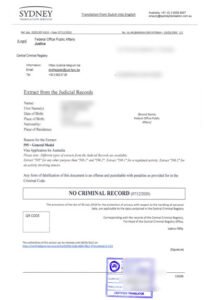
Types of Materials That Require Translation for the MOI Complaints
1. Written Materials
These include:
Emails
WhatsApp or SMS conversations
Letters
Contracts
Reports written in English or other languages
2. Recorded Materials
These include:
Audio recordings
Phone call recordings
Video clips containing spoken content
In recorded materials, the process involves:
Verbatim transcription
Accurate translation into Arabic
Characteristics of a Proper Police Report legal
Translation acceptable for the MoI
A legal translation acceptable for the MoI authorities must be:
✔ Accurate and complete
✔ Literal in meaning, not interpretive
✔ Written in formal legal Arabic
✔ Faithful to the original wording
✔ Free from explanation or commentary
The translator’s role is strictly to transfer content, not clarify, justify, or summarize.
Difference Between General Translation and Police Report Translation
| Aspect | General Translation | Police Report Translation |
|---|---|---|
| Purpose | Understanding | Legal use |
| Language style | Flexible | Formal and legal |
| Accuracy tolerance | Medium | Zero tolerance |
| Legal impact | None | High |
| Acceptable for the police | No | Yes |
Process of the legal translation approval for the MoI
Step 1: Reviewing the Original Material
Read or listen to the entire content
Identify legal terminology
Understand the incident context
Step 2: Transcription (for Recordings)
Transcribe word-for-word
Do not omit pauses or statements
Indicate unclear or inaudible parts
Step 3: Translation into Arabic
Use formal legal Arabic translation
Preserve tone (threats, warnings, admissions)
Maintain original structure and sequence
Step 4: Review and Verification
Linguistic proofreading
Legal terminology check
Cross-checking with original content
Examples of Correct Police Report Translation
Written Example
Original:
The complainant stated that he received threats via email on March 3.
Correct Arabic Translation:
أفاد مقدم الشكوى بأنه تلقى تهديدات عبر البريد الإلكتروني بتاريخ 3 مارس.
Recorded Example
Transcript:
“I will harm you if you go to the police.”
Arabic Translation:
«سأؤذيك إذا ذهبت إلى الشرطة».
Common Mistakes That Cause Police to Reject Translations
❌ Interpretive translation
❌ Paraphrasing instead of literal meaning
❌ Omission of words or sentences
❌ Using informal or spoken Arabic
❌ Relying solely on machine translation
Is Certified Translation Required for Police Reports?
In many cases, yes, especially when:
The complaint will be forwarded to the prosecution
The case involves serious offenses
The translation will be used as evidence
A certified translation usually includes:
Translator’s declaration of accuracy
Signature and stamp
Date of translation
Legal Importance of Accurate Police Report Translation
Incorrect translation may:
Weaken the complaint
Change the legal classification of the offense
Remove intent or threat elements
Harm the complainant’s rights
Accurate translation ensures:
Fair investigation
Correct legal assessment
Protection of all parties’ rights
Judicial reliability
Best Practices Before Submitting a Translated Police Complaint
Ensure full translation without omissions
Keep copies of original materials
Verify names, dates, and numbers
Avoid automatic translation tools
Use professional legal translators
Conclusion
Translating a police complaint report into Arabic is a critical legal process that directly affects the acceptance, investigation, and outcome of a complaint. Whether the material is written or recorded, translation must be accurate, complete, and legally sound.